You Won’t Believe What’s Hiding in Sharjah’s Art Scene
Think the UAE is just Dubai’s skyscrapers and shopping malls? Think again. I recently wandered into Sharjah, and wow—this city hits different. Behind its quiet streets lies a creative explosion: bold murals, intimate galleries, and cultural hubs breathing life into every corner. As the first UNESCO City of Culture in the region, Sharjah doesn’t just display art—it lives it. If you're craving authentic, soulful experiences beyond the usual tourist trail, this place will redefine your idea of Gulf cities.
Why Sharjah? The Quiet Powerhouse of Gulf Culture
While Dubai dazzles with futuristic architecture and Abu Dhabi impresses with grand museums, Sharjah stands apart—not by competing in spectacle, but by leading with substance. Often described as the cultural heart of the United Arab Emirates, Sharjah has long prioritized heritage, education, and artistic expression over commercial glamour. In 2019, it earned global recognition as the first UNESCO Creative City of Literature in the Arab world—a distinction rooted in decades of investment in libraries, publishing, and literary festivals. But its cultural ambition doesn’t stop there. Sharjah has seamlessly extended this ethos into the visual arts, positioning itself as a sanctuary where tradition and innovation coexist in harmony.
Unlike other Gulf cities that measure progress by skyline transformations, Sharjah measures it by community engagement and cultural preservation. The emirate’s leadership has consistently supported the arts through funding, infrastructure, and policy. The result is a sustainable ecosystem where artists can thrive without sacrificing authenticity. Museums aren’t treated as tourist attractions but as civic institutions. Galleries are not exclusive enclaves for collectors but inclusive spaces for public dialogue. This deliberate approach has allowed the city to cultivate a unique identity—one that celebrates Emirati values while embracing global artistic currents.
What truly sets Sharjah apart is its ability to balance reverence for the past with openness to the future. Ancient souqs sit just blocks away from experimental art installations. Traditional wind towers rise beside modernist gallery spaces. This duality isn’t accidental—it’s intentional, reflecting a belief that cultural continuity does not require stagnation. For travelers seeking depth over dazzle, Sharjah offers a refreshing alternative: a city where every street corner whispers stories of resilience, identity, and creativity.
Al Majarrah: Where Tradition Meets Modern Expression
Nestled along the eastern banks of the Khor Al Qudra lagoon, Al Majarrah is one of Sharjah’s oldest residential neighborhoods, and today, it’s undergoing a quiet renaissance. Once home to fishermen and pearl divers, this historic district now pulses with artistic energy. Walking through its narrow lanes feels like stepping into a living museum—one where history isn’t preserved behind glass but reinterpreted in real time. Coral-stone houses, their walls thick and cool against the desert heat, have been carefully restored and repurposed as artist studios, cultural centers, and exhibition spaces.
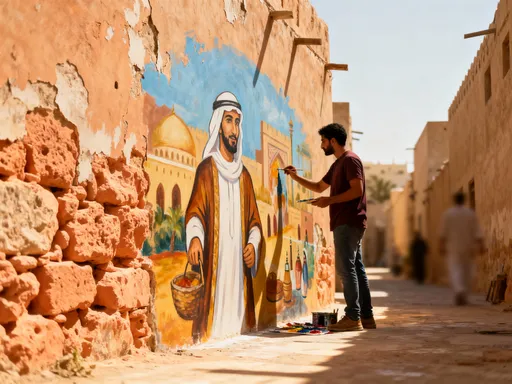
What makes Al Majarrah so compelling is how seamlessly it blends heritage with contemporary expression. On one side of the street, you’ll find a centuries-old courtyard home now hosting a photography exhibit about Emirati family life. On the other, a blank wall becomes a canvas for a vibrant mural depicting the migration of desert birds—an ode to the region’s fragile ecosystems. These public artworks aren’t random decorations; they are narratives painted in color and symbolism, telling stories of identity, memory, and change.
Guided walking tours, led by local historians and artists, offer visitors a deeper understanding of the neighborhood’s transformation. You’ll learn how traditional building techniques are being revived, how young Emirati artists are drawing inspiration from ancestral crafts, and how community-led initiatives are ensuring that development doesn’t erase history. For the culturally curious traveler, Al Majarrah is more than a destination—it’s an invitation to witness how a city honors its roots while growing into the future.
The Heartbeat of the Arts: Sharjah Art Foundation’s Year-Round Impact
At the core of Sharjah’s artistic revival stands the Sharjah Art Foundation (SAF), an institution that has transformed the city’s cultural landscape since its founding in 2009. While many know SAF for its prestigious Sharjah Biennial—a major international exhibition held every two years—the foundation’s influence extends far beyond that single event. Throughout the year, SAF activates underused buildings, turning abandoned warehouses, old schools, and heritage homes into dynamic venues for art and dialogue.
One of its most iconic spaces is Bait Al Serkal, a 19th-century merchant house located in the heart of the arts district. Once dilapidated, it has been meticulously restored and now serves as SAF’s headquarters and a year-round exhibition hall. Here, visitors can encounter everything from experimental video art to archival displays on Gulf modernism. Equally significant is the Al Mureijah Art Spaces, a cluster of restored buildings that host rotating exhibitions, artist talks, and film screenings. These spaces are not only architecturally stunning but also intentionally accessible—admission is free, and programming is designed to welcome both art enthusiasts and casual visitors.
SAF’s commitment to accessibility extends to its support of local and regional artists. Through its residency programs, emerging creatives from across the Middle East receive funding, studio space, and mentorship to develop new work. This investment in talent ensures that Sharjah’s art scene remains rooted in authentic voices rather than imported trends. Additionally, SAF collaborates with schools and community groups to offer workshops and educational programs, fostering a culture where art is not a luxury but a shared resource. In a region often associated with opulence, SAF’s model stands out for its humility, inclusivity, and long-term vision.
Street Art with a Story: Murals That Speak to the Community
In many cities, street art emerges from rebellion—a form of expression born in the margins. In Sharjah, it arises from invitation. Rather than underground movements, the city’s murals are the result of curated public art projects that bring together artists, municipalities, and communities. As a result, every painted wall carries intention, meaning, and permission. There is no random graffiti in Sharjah—only authorized, thoughtfully designed works that contribute to the city’s visual and cultural narrative.
In neighborhoods like Al Zahra and University City, large-scale murals adorn building facades, transforming ordinary streets into open-air galleries. One striking piece in Al Zahra depicts a woman weaving a traditional Sadu pattern, her hands blending into threads that form a map of the Arabian Peninsula. The artwork celebrates Emirati craftsmanship while drawing connections between heritage and geography. Another mural near the university campus shows children planting mangrove saplings, a tribute to environmental conservation efforts along the UAE’s coastlines.
These murals do more than beautify—they educate and inspire. They reflect themes central to Sharjah’s identity: family, sustainability, knowledge, and pride in local culture. Many are created in collaboration with schoolchildren or community groups, ensuring that residents see themselves in the art that surrounds them. For visitors, these works offer a window into the values and aspirations of the people who call Sharjah home. Unlike fleeting trends seen in other global cities, Sharjah’s street art is enduring—both in its physical preservation and in its emotional resonance.
Hidden Gems: Smaller Galleries and Independent Studios
Beyond the well-known institutions and curated districts, some of Sharjah’s most rewarding artistic experiences happen in unexpected places. Tucked away on Iran Street, a quiet lane known for its historic homes and family-run shops, a handful of independent artist studios open their doors to curious visitors. These intimate spaces offer a rare chance to see art being made—brushes still wet on palettes, sketches pinned to walls, and creators eager to share their process.
One such studio belongs to Fatima Al Hosani, a multidisciplinary artist whose work explores memory and place through mixed media. Her pieces incorporate found objects—old keys, fabric scraps, handwritten letters—each item carrying personal and cultural significance. Visitors aren’t just observers; they’re invited to listen, ask questions, and even try their hand at simple techniques under her guidance. These interactions create a sense of connection often missing in larger, more formal galleries.
Elsewhere, pop-up exhibitions in the old souq bring contemporary art into ancient market lanes. A recent display featured ceramic sculptures inspired by pre-Islamic pottery, placed among spice stalls and textile vendors. The contrast was striking, yet harmonious—a reminder that tradition and innovation need not be at odds. For travelers who value authenticity over spectacle, these smaller venues offer a slower, more meaningful way to engage with Sharjah’s creative spirit. They prove that art in this city isn’t confined to white-walled galleries—it thrives in homes, markets, and alleyways.
Practical Magic: How to Experience Sharjah’s Art Scene Like a Local
To fully appreciate Sharjah’s art scene, timing and approach matter. The best period to visit is between October and April, when temperatures are mild and outdoor exploration is comfortable. March is particularly special—it’s when the Sharjah Art Foundation hosts its annual Art Week, a citywide celebration featuring installations, performances, film screenings, and artist talks. Even outside festival season, the city remains active, with rotating exhibitions and community events happening year-round.
Getting around is easy and affordable. The Sharjah Light Rail Transit is under development, but for now, the best way to experience the art districts is on foot or by bicycle. A well-marked walking trail connects key sites—from Al Majarrah through the Arts Area to the Heart of Sharjah historic district. Along the way, you’ll pass cultural cafés like Java Coffee Roasters, where you can sip cardamom-scented coffee while flipping through locally published art books. Many galleries are clustered within a 20-minute walk of each other, making it simple to combine visits with leisurely breaks.
When visiting galleries or heritage sites, modest dress is appreciated as a sign of cultural respect. Photography is generally allowed, though some exhibitions may restrict flash or video recording—always check signage or ask staff. While Arabic is the official language, English is widely spoken in cultural spaces, and many guides offer multilingual tours. For a truly local experience, consider joining a community-led tour or signing up for a short workshop, such as Arabic calligraphy or henna design. These hands-on activities deepen your connection to the culture and support local artisans directly.
Beyond the Canvas: Art in Daily Life – Crafts, Calligraphy, and Community
In Sharjah, art is not confined to galleries or special occasions—it’s woven into the fabric of everyday life. At the Sharjah Arts & Crafts Institute, master artisans teach traditional skills like Sadu weaving, palm frond basketry, and pottery. These are not demonstrations for tourists; they are living practices passed from generation to generation. Visitors can enroll in workshops, spending a morning learning to weave geometric patterns or shape clay using age-old techniques. The resulting pieces—whether a small bowl or a woven coaster—carry the weight of history and the warmth of human touch.
Calligraphy, too, holds a revered place in the city’s artistic identity. As a cornerstone of Islamic art, Arabic script is treated not just as writing but as visual poetry. Regular workshops invite participants to try their hand at different calligraphic styles, from the flowing Naskh to the bold Kufic. Even public spaces reflect this reverence: building facades, park signs, and bridge railings often feature elegant script, turning the city itself into a gallery of letters.
Urban planning in Sharjah also reflects an artistic sensibility. Roundabouts are adorned with sculptures. Park benches are painted in vibrant colors. Even utility boxes on street corners become canvases for community art projects. This attention to aesthetic detail sends a clear message: beauty matters. It’s not an afterthought or a luxury—it’s a necessity for a dignified, joyful life. For residents and visitors alike, Sharjah offers a powerful reminder that creativity is not just something we consume—it’s something we live.
As the sun sets over the Arabian Gulf, casting golden light across Sharjah’s rooftops and alleyways, the city reveals its true nature. It is not merely a place that hosts art—it is a place that *is* art. From its thoughtfully restored neighborhoods to its community-driven murals, from its world-class institutions to its humble craft workshops, Sharjah redefines what a Gulf city can be. It proves that culture doesn’t have to be loud to be powerful, or flashy to be meaningful. For travelers willing to look beyond the stereotypes, this city offers a rare gift: the chance to experience a culture that values depth, dignity, and connection. So come not to see art as decoration, but to feel it as the soul of a place—alive, breathing, and waiting to be discovered.