You Won’t Believe How Kathmandu’s Streets Serve Food and History on Every Corner
Wandering through Kathmandu, I didn’t just taste amazing food—I felt centuries of history in every bite. The way ancient temples frame street stalls, and how spice-scented alleys mirror the carvings on medieval courtyards, blew my mind. This city doesn’t separate architecture from flavor; they’re woven together. If you think Nepali food is just momos, trust me—you’re in for a wild, delicious awakening. Here, a meal isn’t merely sustenance—it’s an immersion into layers of cultural memory, where wooden struts hold up not just roofs but generations of recipes, and every alleyway hums with the quiet rhythm of fire, flour, and tradition. To walk Kathmandu’s streets is to dine within a living museum, where taste and time share the same table.
First Bites in the Old Quarter
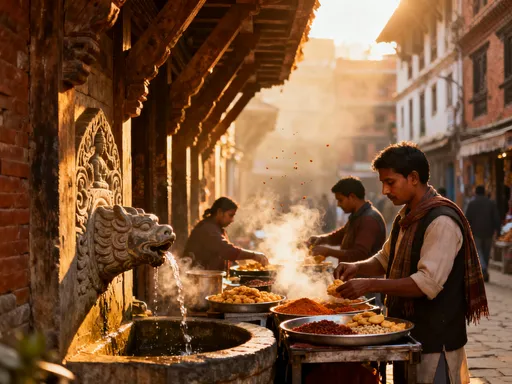
Stepping into the heart of Kathmandu’s old city is like entering a world where time folds in on itself. The air carries a rich tapestry of scents—charred lentils, toasted cumin, and the faint earthiness of centuries-old brick. Around every corner, vendors squat beside small iron griddles or clay ovens, their stalls nestled beneath weathered wooden eaves that have sheltered artisans and traders for hundreds of years. In the Durbar Square area, where UNESCO-listed palaces rise above bustling footpaths, food isn’t an afterthought—it’s part of the architecture. A vendor grilling sel roti, the sweet, ring-shaped rice bread, sets up beside a stone spout carved with the face of a nag (serpent deity), its waters flowing as they have since the 17th century. Nearby, another family ladles steaming bowls of aloo tama, a sour black-eyed pea and potato stew, from a dented aluminum pot. These are not fast-food stops; they are culinary heirlooms passed down like the timber-framed homes that surround them.
The Newari urban design of Kathmandu’s old quarter is inherently communal, and this shapes how food is made and shared. Courtyards, known as choks, serve as both social and culinary hubs. Families gather here to prepare feasts during festivals, and neighbors exchange dishes across low brick walls. Even the verandas, supported by intricately carved struts depicting deities and mythical beasts, double as informal dining areas during monsoon season when rain drives meals indoors. This integration of space and sustenance means that eating is never isolated—it happens in conversation, in community, under the watchful eyes of gods carved in wood and stone. The architecture doesn’t just house food culture; it enables it, encourages it, celebrates it.
One of the most striking aspects of this symbiosis is how food stalls often occupy spaces originally designed for ritual or civic function. A dhara, or drinking fountain, once served as a public water source and spiritual offering point. Today, many of these fountains are still active, and the small platforms beside them have become prime real estate for food vendors. A grandmother selling beaten rice with spicy chutney might set up just steps from where pilgrims once washed their hands before temple visits. This continuity—where daily nourishment follows the same pathways as sacred practice—speaks to a worldview in which the physical and spiritual, the mundane and the divine, are not opposed but intertwined. In Kathmandu, to eat is to participate in a long, unbroken chain of devotion and daily life.
The Temple Courtyards That Feed the Soul (and Stomachs)
Beyond the city center, temple complexes like Swayambhunath and Pashupatinath reveal another dimension of Kathmandu’s food-architecture fusion. While visitors come to marvel at golden spires and meditating monks, fewer notice the quiet kitchens tucked into stone alcoves, where bhandaris—temple-appointed cooks—prepare prasad, the sanctified food offered to deities before being shared with devotees. These meals are not afterthoughts; they are central to the temple’s rhythm. At Pashupatinath, one of the most sacred Hindu sites in the world, clay ovens are built directly into the foundations of ancillary buildings, their smoke curling up alongside incense from nearby shrines. The ovens, some centuries old, have been maintained through generations, their design optimized for slow-cooking lentils, rice, and milk-based sweets like kheer.
The presence of food within sacred spaces is not incidental—it reflects a philosophy in which nourishment is a form of worship. At Swayambhunath, the iconic ‘Monkey Temple’ atop a hill west of the city, pilgrims circle the stupa clockwise, spinning prayer wheels as they go. But many also stop at small kiosks selling butter tea and steamed dumplings. These stalls are not commercial intrusions; they are part of the pilgrimage experience. Just as prayer wheels carry mantras into the wind, the act of eating here—especially when sharing food with others—is seen as an offering in itself. The layout of these complexes ensures that food is never far from worship. Covered walkways lead from prayer halls to dining areas, and shaded patios provide rest for travelers who have climbed hundreds of steps to reach the summit. The architecture guides not just movement, but metabolism.
Seasonal festivals deepen this connection. During Yomari Punhi, a winter harvest celebration, children parade through Patan and Kathmandu carrying baskets of yomari—steamed rice-flour dumplings filled with molasses and sesame. These treats are made in homes and temples alike, their shape echoing the dome of a stupa or the curve of a mandala. In some viharas, or Buddhist monasteries, the preparation of yomari is a communal event, with monks and laypeople working side by side in courtyards where frescoes depict ancient feasts. The timing of the festival aligns with the winter solstice, a moment when light begins to return—symbolically, a time of renewal, both spiritual and physical. The food, then, is not just a celebration of harvest but a ritual reenactment of balance, harmony, and the cyclical nature of life, mirrored in the symmetrical design of the temples themselves.
Newari Houses: Where Feasts Live in the Woodwork
In Patan, one of Kathmandu Valley’s three historic cities, the Newari architectural tradition reaches its zenith. Here, preserved neighborhoods like Lagankhel and Sundhara showcase centuries-old courtyard homes known as bahals, where life unfolds around a central open space surrounded by two- or three-story buildings. These homes are not just beautiful—they are functional masterpieces of climate-responsive design, with thick brick walls, latticed windows, and tiered wooden roofs that provide shade and ventilation. Many of these bahals have been restored as heritage guesthouses, allowing visitors to experience not just the architecture, but the culinary traditions it supports.
One such guesthouse operates out of a 300-year-old sattal, a traditional rest house once used by travelers and monks. Today, it serves as a dining hall where guests sit on hand-carved wooden benches and eat meals prepared in a kitchen that retains its original clay oven and stone grinding slab. The presentation of food here is deliberate: dishes are arranged on brass plates in circular patterns that echo the mandalas carved into the wooden struts above. A platter of chatamari, the Newari ‘pizza’ made from rice flour and topped with egg or minced meat, might be flanked by small bowls of spicy chutney placed like the cardinal points of a compass. This aesthetic is not mere decoration—it reflects a worldview in which order, balance, and beauty are essential to well-being.
One host, a fourth-generation resident of Patan, explained how family recipes are preserved with the same care as architectural blueprints. ‘We don’t write them down,’ she said. ‘We pass them through doing—just like how our fathers taught us to carve wood or lay brick.’ Her kitchen, tucked behind a latticed simsim window, is a study in efficiency: every tool has its place, every ingredient stored in clay jars that regulate humidity. The design of the home supports this precision. High ceilings allow heat to rise, keeping the lower levels cool, while the courtyard funnels breezes through the house. Even the placement of the kitchen—often on the ground floor, near a water source—reflects centuries of practical wisdom. In this way, the house is not just a container for life; it is a participant in it, shaping how food is made, shared, and remembered.
Street Food Stalls with a Side of History
Asan Tole, one of Kathmandu’s oldest market squares, offers a vivid example of how commerce, cuisine, and architecture have evolved together. This bustling intersection has served as a trade hub since the Malla period (12th–18th century), connecting merchants from Tibet, India, and the Himalayan foothills. Today, it remains a sensory overload of color, sound, and scent. Women in saris barter for lentils, monks in maroon robes pause at tea stalls, and motorbikes weave through crowds carrying sacks of rice. Amid this chaos, food vendors operate from stalls built into the historic arcades—timber-framed structures with brick infill and sloping tiled roofs designed to withstand earthquakes. These buildings, some over 200 years old, are not relics; they are working spaces where tradition and necessity coexist.
One vendor fries chatamari on a stone slab heated by a charcoal fire, her movements swift and practiced. The stall has no sign, no menu—regulars know what to order. Another sells kwati, a nutritious soup made from nine types of sprouted beans, traditionally eaten during Gunla, the sacred month of music and fasting. What’s remarkable is how each stall’s location influences its character. A kwati vendor in a brick-walled enclave near a temple serves a thicker, spicier version, tailored to devotees seeking warmth and energy. Another, operating beneath a timber canopy in a more open area, offers a lighter, tangier broth, suited to midday shoppers. The architecture, then, doesn’t just shelter the food—it shapes its form and flavor.
The simsim, or wooden lattice windows, play a crucial role in this ecosystem. Found in homes and shops alike, these intricate screens allow air to circulate while maintaining privacy—a necessity in a densely populated city. In kitchens, they enable smoke to escape while shielding cooks from public view, preserving modesty without sacrificing function. This balance of openness and enclosure is central to Newari design philosophy, and it extends to food culture. Meals are often prepared in full view of the street, yet served in intimate, inward-facing spaces. The boundary between public and private is porous, much like the boundary between eating and ritual. In Asan Tole, to buy food is not just a transaction; it is an act of participation in a living urban fabric.
Hidden Rooftop Eateries and Forgotten Patios
Above the noise of the streets, Kathmandu offers quieter, more contemplative dining experiences. In Bhaktapur, a city renowned for its preservation of medieval architecture, rooftop cafes have become sanctuaries for travelers seeking both comfort and context. These eateries are not modern additions; they are adaptations of existing structures, made possible by strict building height regulations that prevent high-rises from disrupting the skyline. From a rooftop table, one can gaze across a sea of red-tiled pagoda roofs, their upturned eaves mirroring the peaks of the distant Himalayas. The meal—perhaps a plate of sautéed greens with garlic and chili, or a bowl of rich, spiced yogurt—tastes different here, elevated not just in altitude but in meaning.
Further off the tourist trail, secluded patio restaurants offer another kind of intimacy. One such place, near a disused hiti in Kathmandu’s Thamel periphery, operates in what was once a granary. The stone walls, thick and cool, still bear marks from where wooden beams once supported grain stores. Today, the space is lit by oil lamps, and the menu features dishes inspired by the site’s history—barley porridge, dried vegetable curries, and fermented milk drinks. The owner, a local historian, explains that the restaurant’s purpose is not just to serve food but to revive memory. ‘We don’t rebuild the past,’ he says. ‘We reuse it, respectfully.’ This philosophy of adaptive reuse is gaining traction across the city, as old homes, storehouses, and even monastic buildings are transformed into dining spaces without altering their facades or structural integrity.
These transformations are more than aesthetic—they are acts of cultural preservation. By repurposing historic buildings for contemporary use, Kathmandu ensures that its architectural heritage remains alive, not frozen in time. A granary becomes a place where people gather to eat; a sattal becomes a dining hall; a courtyard becomes a stage for storytelling over shared meals. In each case, the building continues to serve the community, just as it did centuries ago. For visitors, dining in these spaces is not just a meal—it is a dialogue with history, a chance to sit where farmers once stored grain, or where monks once rested on pilgrimage.
The Spice Markets That Mirror Temple Layouts
Indra Chowk, the historic heart of Kathmandu’s commercial district, is a feast for the senses. Here, spice vendors display their wares in pyramids of color—golden turmeric, deep red chili, earthy cumin, and saffron threads like strands of sunlight. The sacks are stacked with geometric precision, their arrangement echoing the tiered pagodas that rise nearby. This is no coincidence. The layout of the market follows ancient pathways that once guided pilgrims to temples, and the flow of foot traffic has remained largely unchanged for centuries. To walk through Indra Chowk is to move through a living map of ritual and trade, where the same routes serve both worship and commerce.
One vendor, whose family has operated from the same stone-fronted shop for over 150 years, explains how design ensures continuity. ‘The shop hasn’t changed,’ he says. ‘The counter is the same height, the shelves in the same place. Even the pestle we use to grind spices is the same shape as my grandfather’s.’ This adherence to form reflects a deeper value: stability. In a city prone to earthquakes and rapid change, the preservation of physical space offers a sense of permanence. The spice trade, like the architecture, is a form of cultural memory. Each sack, each jar, carries not just flavor but lineage.
The sensory experience of the market is striking. The vibrant colors of the spice displays resemble the intricate mandalas carved into temple doors, their symmetry and balance pleasing to the eye. The air is thick with aroma, a blend of warmth and earthiness that lingers long after one leaves. Yet beneath this beauty lies a practical intelligence. The placement of stalls, the height of counters, the depth of storage shelves—all are optimized for efficiency and durability. Even the stone foundations, designed to resist moisture and pests, reflect centuries of accumulated knowledge. In Indra Chowk, food and form are not separate disciplines; they are expressions of the same wisdom.
Why Kathmandu’s Food Architecture Can’t Be Replicated
Despite its resilience, Kathmandu’s delicate balance between culinary and architectural heritage is under pressure. Urban development, population growth, and the rise of concrete construction threaten to erase the very features that make the city unique. In some neighborhoods, historic timber homes have been replaced by faceless apartment blocks, their courtyards paved over for parking, their kitchens replaced with gas stoves in cramped units. The rhythm of street food—once guided by the flow of temple visits and market cycles—is now disrupted by traffic, noise, and zoning regulations. In these areas, food is still eaten, but the context that gives it meaning is fading.
Yet there is hope. In zones like Patan’s UNESCO-protected core and Bhaktapur’s historic center, strict conservation policies have preserved the old ways. Here, new construction must adhere to traditional materials and forms, ensuring that the city’s character endures. Sustainable tourism is also playing a role. Travelers who seek authentic experiences are increasingly choosing heritage guesthouses, family-run eateries, and markets that honor local traditions. Their presence provides economic incentive to preserve, not replace. When a visitor pays for a meal in a restored sattal, they are not just buying food—they are investing in continuity.
The lesson of Kathmandu is clear: true authenticity cannot be manufactured. It emerges from the slow accretion of time, practice, and place. A dish tastes different when it is made in a kitchen cooled by centuries-old brick, served on a plate that reflects the carvings above, eaten in a courtyard where generations have gathered. This is not nostalgia—it is a living system, where food, architecture, and culture are inseparable. For travelers seeking depth, the message is simple: come not only to eat, but to see food anew. In Kathmandu, every meal is a monument.
Kathmandu doesn’t serve meals—it offers living tableaux where every dish tells a story of wood, stone, and spice. To eat here is to step into a 3D archive of culture, where flavor and form are inseparable. As cities modernize, this fusion reminds us that true authenticity lies not just in taste, but in context. Travelers seeking depth should come not only to eat, but to see food anew.