This Is What Happens When You Get Lost in Laos’ Forgotten Islands
You know that feeling when you stumble upon a place so untouched it feels like the world forgot to claim it? That’s Si Phan Don. Nestled in the Mekong River, this cluster of low-lying islands is built on ancient riverbeds, where water splits into wild channels and flood-resistant palms lean like they’ve accepted the chaos. I went expecting quiet sunsets—and found a terrain so surreal, it rewired how I see travel. There are no grand monuments, no polished promenades, just a landscape shaped by time, water, and the quiet persistence of those who live within its rhythm. This is not a place to check off a list. It’s a place to let go.
Arrival: The Last Stop Before the Wild Mekong
Reaching Si Phan Don feels less like a destination and more like a slow unraveling of the modern world. Most travelers arrive via a border crossing from southern Cambodia, stepping off a bus in the dusty town of Veun Kham before boarding a rickety minivan or motorbike taxi for the final stretch. The roads narrow, the air thickens with humidity, and the landscape shifts from farmland to dense riverside vegetation. Then, the river appears—wide, brown, and moving with quiet power. A short ferry ride later, you’re on Don Det, the gateway to the archipelago.
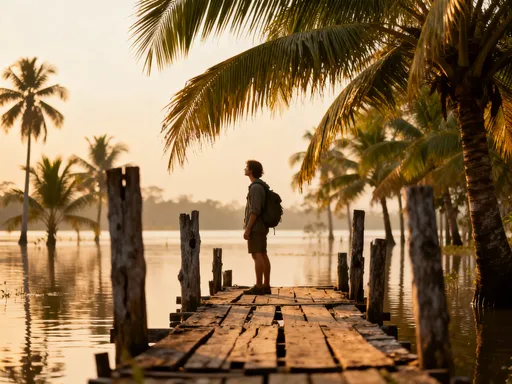
The journey itself is part of the transformation. There are no flights, no highways, no digital check-ins. Just a series of small transitions—bus, van, boat—that strip away the noise of constant connectivity. By the time you step onto the wooden docks of Don Det, your pace has already slowed. The sound of motorbikes fades into the clatter of bamboo wind chimes and the occasional shout from a fisherman pulling in his net. This is not accidental. Si Phan Don exists on the edge of Laos’ southern border, a place where infrastructure thins and the Mekong River reigns supreme. It’s one of the last stretches of the river before it flows into Cambodia, and that geographical isolation is what has preserved its character.
First impressions are defined by simplicity. Guesthouses are low wooden structures on stilts, their balconies facing the river. Paths are made of packed dirt or gravel, lined with frangipani trees and the occasional wandering dog. There are no traffic lights, no supermarkets, and only a handful of ATMs. What you find instead is a rhythm tied to daylight, water levels, and the occasional passing boat. It’s not rustic by design—it’s a reflection of how life unfolds here, shaped by forces larger than tourism. To arrive in Si Phan Don is to step into a world where the map ends and the river begins.
Understanding the Terrain: Islands Built on Water and Time
Si Phan Don, which translates to “Four Thousand Islands,” is a misnomer—and a poetic one. The actual number of landmasses scattered across this stretch of the Mekong is closer to a few hundred, many of them submerged during the wet season. What makes this archipelago truly unique is its geological origin. Formed during the last Ice Age, the islands sit atop an ancient river delta where the Mekong fractures into countless channels. This is not a volcanic chain or a coral atoll. These are fragments of land carved out by water, shaped by millennia of seasonal flooding and sediment deposits.
The defining feature of the terrain is the Khone Phapheng Falls, the widest waterfall in the world by volume. Though not a single vertical drop, the falls consist of a series of rapids, cascades, and rocky outcrops that force the river to split and swirl in unpredictable ways. This natural barrier has historically prevented navigation between Laos and Cambodia, making the area a quiet backwater—both geographically and culturally. The energy of the falling water shapes everything: the direction of boat routes, the placement of villages, even the angle at which palm trees grow.
What visitors often don’t realize is how dramatically the landscape changes with the seasons. During the dry season, from November to April, wide sandbanks emerge, connecting islands and revealing hidden trails. Water levels drop, and the river contracts, exposing rocky islets and creating natural swimming holes. But when the rains come, the Mekong swells, swallowing entire fields and transforming roads into waterways. Some guesthouses become accessible only by boat. This fluid boundary between land and water is not a flaw—it’s the essence of the place. The islands are not fixed. They breathe with the river, expanding and receding like a living organism.
Ecologically, this dynamic environment supports a rich web of life. The flooded forests serve as nurseries for fish, while the rapids attract migratory species like the critically endangered Irrawaddy dolphin. The interplay of fast and slow water creates microhabitats that sustain everything from freshwater turtles to rare bird species. For the traveler, this means every visit is different. The path you walked last week may now be underwater. The island that seemed distant may now be reachable on foot. This is terrain that refuses to be pinned down—and that’s what makes it so compelling.
Don Det, Don Khon, Don Khong: A Trio of Contrasts
While Si Phan Don comprises hundreds of islets, most travelers focus on three main islands: Don Det, Don Khon, and Don Khong. Each offers a distinct character, shaped by geography, history, and human adaptation. Together, they form a triangle of experiences, revealing different facets of life along the Mekong.
Don Det is the most accessible and the most traveled. Connected to Don Khon by a narrow causeway, it has become a hub for backpackers and budget travelers. Rows of guesthouses line the riverfront, many with hammocks strung between trees and open-air bars serving cold Beerlao. It’s the island of social energy—of shared meals, impromptu music sessions, and travelers comparing stories from the road. Yet even here, the pace remains slow. There are no nightclubs, no loudspeakers blasting music. The rhythm is set by the sun. By 9 p.m., the island quiets down, and the stars come out in full force. What makes Don Det special is not its amenities but its balance—a place where connection happens naturally, without the pressure of constant activity.
Just a short ride across the bridge is Don Khon, the most historically layered of the three. This island was once a stop on the French colonial railway, built in the early 20th century to bypass the Khone Phapheng Falls. Remnants of that era remain: rusted rail tracks, crumbling station platforms, and a few preserved locomotives hidden in the jungle. The French also built elegant wooden villas here, some of which have been restored as guesthouses. Walking through Don Khon feels like moving through a forgotten archive. The jungle has reclaimed much of the infrastructure, but the bones of the past are still visible.
Don Khong, the largest and least visited, offers a different kind of solitude. It’s wider, flatter, and more rural. Here, you’ll find rice paddies, coconut groves, and villages where life follows traditional patterns. There are no hostels, few tourists, and only a handful of guesthouses run by local families. Biking across Don Khong feels like riding through the heart of rural Laos. You pass children walking to school, women weaving baskets, and men repairing fishing nets. The island has a quiet dignity, untouched by the backpacker trail. It’s the best place to experience the slow, grounded rhythm of Mekong life.
Life on Shifting Ground: How Locals Adapt to the Rhythm of Water
Living in Si Phan Don is not about resisting change—it’s about moving with it. The annual flood cycle dictates nearly every aspect of daily life. During the wet season, water levels can rise by as much as seven meters, submerging roads, fields, and even parts of villages. But rather than fight this reality, the people here have learned to live within it. Their homes are built on wooden stilts, some as high as ten feet off the ground, allowing water to flow freely beneath. During peak floods, boats become the primary mode of transportation, even for short distances.
One of the most striking adaptations is the use of bamboo bridges. Each dry season, communities rebuild footbridges connecting islands using locally harvested bamboo and rope. These structures are not permanent—they’re meant to wash away when the rains return. There’s a quiet wisdom in this impermanence. Instead of investing in concrete and steel, the people accept that some things are meant to be temporary. The bridges are rebuilt each year, often as a communal effort, reinforcing social bonds as much as physical connections.
Agriculture here is equally adaptive. Floating gardens—plots of vegetation anchored to bamboo rafts—allow families to grow vegetables even when the land is underwater. These gardens drift with the current, their roots suspended in nutrient-rich river water. Fish farming is also common, with cages placed in calm channels where tilapia and catfish thrive. Fishing remains a cornerstone of the local diet, and traditional methods are still used: cast nets, bamboo traps, and hand lines with simple hooks. There’s little reliance on industrial equipment. What tools exist are modified for the environment—bikes with reinforced frames for sandy paths, boats with shallow drafts for narrow channels.
What stands out is not hardship, but harmony. There’s no sense of struggle against nature. Instead, there’s a deep understanding that life here is cyclical. The floods bring destruction, yes, but they also deposit fertile silt that enriches the soil. The dry season offers stability, but also challenges in water access. This balance is not taught in schools—it’s passed down through generations, embedded in daily routines. To witness it is to understand that resilience is not about endurance, but about adaptation.
Beyond the Waterfalls: Hidden Trails and Forgotten Railways
While the Khone Phapheng Falls draw many visitors, the true magic of Si Phan Don lies off the main paths. On Don Khon, the remnants of the French colonial railway offer a quiet adventure. The tracks, laid in 1905, were meant to transport goods around the impassable rapids. Today, they’re overgrown with vines, the metal rails half-buried in moss and dirt. Walking or biking along them feels like stepping into a forgotten chapter of history. In some sections, the path runs alongside the river, offering views of swirling currents and rocky islets. In others, it cuts through dense jungle, where the air is thick with the scent of damp earth and wild ginger.
Not far from the old railway is the Li Phi waterfall, a series of cascades that flow through narrow channels of black rock. Unlike the thunderous Khone Phapheng, Li Phi is intimate—small pools perfect for swimming, surrounded by smooth stones and overhanging trees. It’s a place of stillness, where the only sounds are water and birdsong. Few tour groups come here. Most visitors find it by word of mouth or by following local children on their way to swim after school.
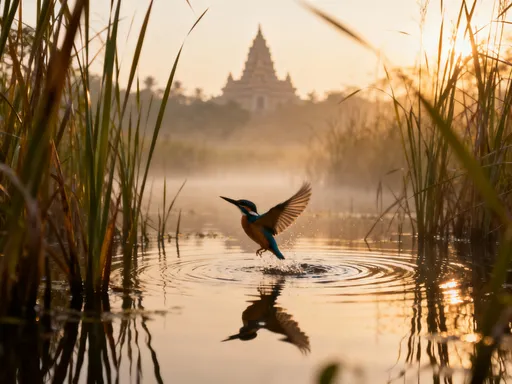
Another hidden gem is the Hou Sahong channel, a narrow passage where the Mekong funnels through a tight corridor of rock. This is one of the few places where you might spot the elusive Irrawaddy dolphin, its rounded head breaking the surface in slow, deliberate movements. The best way to see them is by longtail boat at dawn, when the river is calm and the light is soft. There are no guarantees—these animals are shy and their numbers are small—but the act of searching becomes its own reward. The journey takes you through quiet waterways, past herons standing motionless in the shallows and kingfishers darting between branches.
Exploration here is never about ticking off attractions. It’s about the feeling of discovery—the path that appears unexpectedly, the village elder who offers you tea, the moment you realize you’ve been biking for an hour without seeing another tourist. There are no entrance fees, no guided tours with loudspeakers, no souvenir stalls. What you find instead is authenticity, uncurated and unfiltered. The terrain rewards curiosity, but only if you’re willing to move slowly and pay attention.
The Slow Travel Mindset: Why This Place Changes You
Si Phan Don doesn’t just change what you see—it changes how you think. In a world dominated by speed, efficiency, and constant stimulation, this place operates on a different frequency. There is no Wi-Fi in most guesthouses. Phone signals are spotty. Electricity may flicker in the evenings. At first, this can feel like a inconvenience. But within a day or two, something shifts. The absence of digital noise creates space—for thought, for observation, for presence.
Time here is not measured in minutes but in tides, sunlight, and meal cycles. You wake when it’s light. You eat when food is ready. You rest when the heat is strongest. There’s no rush to “see everything” because there’s no checklist. The islands don’t offer a curated experience. They simply exist. And in that existence, they invite you to do the same. This is the essence of slow travel: not just moving slowly, but being fully where you are.
Many visitors report a surprising emotional shift. The constant hum of anxiety—the need to plan, to achieve, to be productive—begins to fade. In its place comes a sense of calm, not because the place is perfect, but because it doesn’t pretend to be. The bamboo bridge will wash away. The road will flood. The guesthouse may lose power. And yet, life continues. This impermanence, so often feared in modern life, becomes a source of peace. You begin to accept that not everything can be controlled—and that’s okay.
For women in their thirties to fifties, many of whom carry the weight of family, work, and endless to-do lists, this shift can be profound. Si Phan Don doesn’t offer spa treatments or luxury retreats. It offers something deeper: the chance to reconnect with a simpler rhythm. To sit on a porch and watch the river without checking your phone. To talk to a local woman as she weaves a mat, learning a skill that takes patience and practice. To realize that slowing down is not laziness—it’s a form of wisdom.
How to Visit Responsibly: Preserving the Fragile Balance
Si Phan Don’s beauty is fragile. The ecosystem, the culture, and the way of life here depend on balance. Tourism, while a source of income, can easily disrupt that balance if not managed with care. The best time to visit is during the dry season, from November to April, when water levels are low, trails are accessible, and the weather is mild. Avoid the wet season unless you’re prepared for flooded paths and limited mobility.
When choosing where to stay, prioritize homestays and family-run guesthouses over larger commercial operations. These not only offer a more authentic experience but ensure that your money supports local households directly. Many families provide simple but nourishing meals made from local ingredients—grilled fish, sticky rice, fresh vegetables—served on hand-carved wooden tables. This is not just about comfort; it’s about connection.
Transportation choices matter. Rent a bicycle instead of a motorbike. The islands are flat, the paths are wide, and the pace of biking matches the spirit of the place. Motorized vehicles create noise, pollution, and a sense of urgency that doesn’t belong here. If you need a boat, hire a local fisherman rather than a commercial tour operator. They know the water, respect the dolphins, and will take you to places that aren’t on the tourist map.
Waste is a growing concern. Single-use plastics are difficult to dispose of here, and there are no large-scale recycling systems. Bring a reusable water bottle, avoid packaged snacks, and carry out what you bring in. Respect local customs—dress modestly when visiting villages, ask before taking photos of people, and speak quietly in shared spaces. This is not a performance for visitors. It’s someone’s home.
Most importantly, come with the right mindset. Don’t treat Si Phan Don as a backdrop for Instagram photos. Listen to the river. Talk to the people. Let the place unfold at its own pace. Sustainability here isn’t a trend—it’s survival. And every respectful visitor helps preserve that balance.
Si Phan Don isn’t just a destination; it’s a lesson in living with nature’s rhythm. Its terrain—shaped by water, time, and resilience—doesn’t just define the land but transforms those who move through it. To visit is not to conquer, but to adapt, to slow down, and to remember that some places thrive not in spite of their fragility, but because of it. The real journey begins when you stop searching for answers and start listening to the river.